
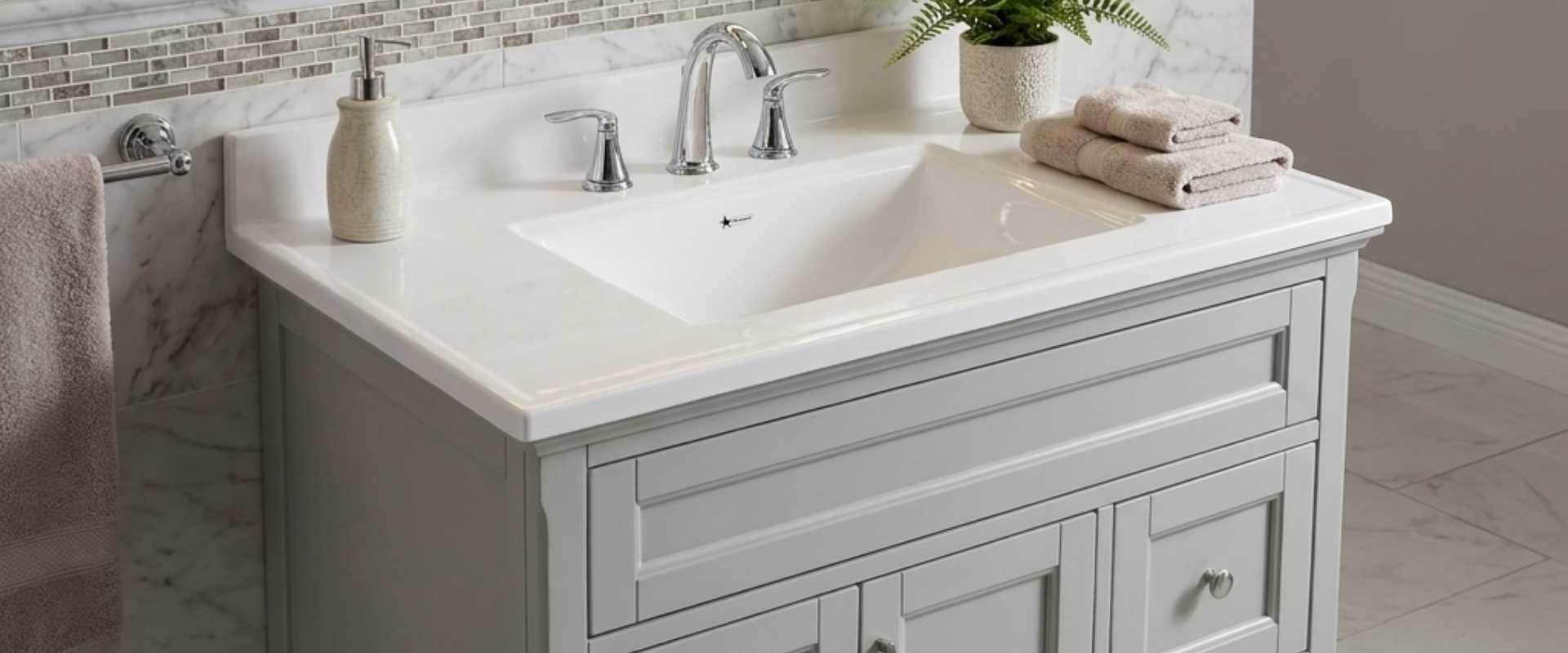
Three Bowl Options, One Decision
When specifying a cultured marble vanity top, one of the most important decisions is the bowl configuration. You have three options: integral bowls, undermount sinks, and drop-in (self-rimming) sinks. Each has distinct advantages, and the right choice depends on your project's priorities — whether that is seamless aesthetics, design flexibility, or budget considerations.
ARSTAR offers all three configurations across our vanity top collections, so this guide will help you choose the option that best fits your project.
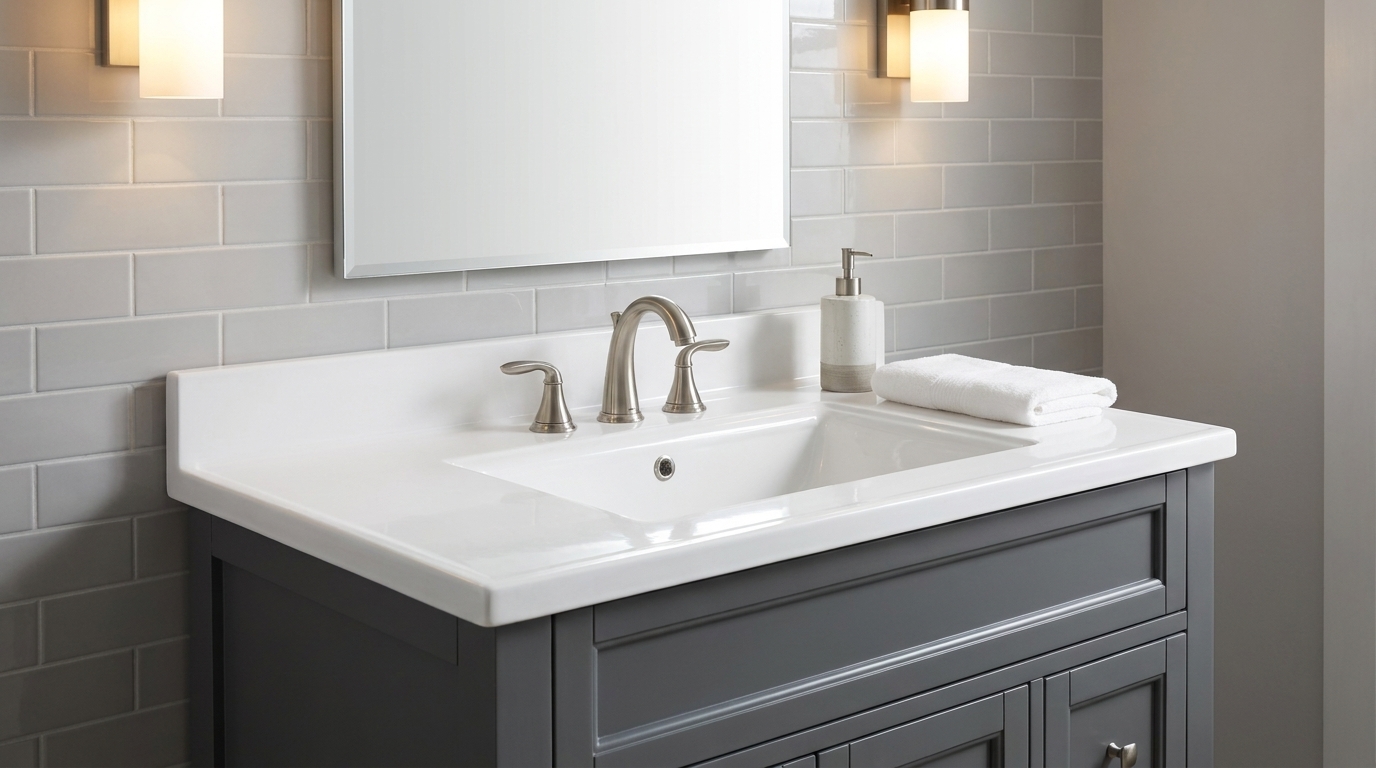
Integral Bowls: The Seamless Choice
An integral bowl is cast as a single piece with the vanity top. There is no seam, no joint, and no separate sink — the bowl and counter surface are one continuous unit.
Advantages
- Completely seamless: No gap between sink and countertop means no place for grime, mold, or bacteria to accumulate. This is the most hygienic option.
- Easy to clean: Simply wipe the entire surface in one motion — no seam to scrub around.
- Fastest installation: No sink to mount separately. The vanity top is the sink. This saves 30–60 minutes per unit during installation.
- Lower total cost: You are buying one product instead of two (countertop + separate sink). No undermount clips, no additional plumber labor to mount a sink.
- Color-matched perfectly: Since the bowl is part of the same casting, the color match between bowl and countertop is always perfect — no variation between a white countertop and a "white" porcelain sink that may be slightly different.
- No failure point: Undermount sinks can potentially separate from the countertop over time if adhesive fails. Integral bowls cannot — the bowl is the countertop.
Considerations
- Bowl shape and size are determined by the vanity top model. You cannot swap in a different bowl shape or size.
- If the bowl is damaged, the entire vanity top typically needs replacement (though damage severe enough to warrant replacement is rare).
Best For
Residential bathrooms, multifamily housing, hospitality, healthcare, and any application where hygiene, easy cleaning, and cost efficiency are priorities.
Undermount Sinks: The Designer Choice
With an undermount configuration, the vanity top has a cutout, and a separate sink is mounted from beneath the counter. The countertop edge is visible around the cutout opening, and the sink bowl hangs below.
Advantages
- Design flexibility: You can pair the vanity top with any compatible undermount sink — porcelain, ceramic, stainless steel, or even copper. This allows for creative design combinations.
- Clean sightline: The countertop edge flows smoothly over the sink cutout, creating a sleek, modern look.
- Easy to sweep debris into the sink: The flush countertop edge means you can wipe crumbs and debris directly off the counter into the bowl.
Considerations
- Seam maintenance: The joint between the countertop edge and the sink must be properly sealed. Over time, this seal can degrade and may need reapplication.
- Higher cost: You are purchasing the vanity top and the sink separately, plus the labor to mount the undermount sink.
- Installation complexity: Undermount sinks require clips, adhesive, and careful alignment. This adds time and skill requirements to installation.
- Potential failure: In rare cases, undermount adhesive can fail over time, causing the sink to separate from the countertop.
Best For
Custom residential bathrooms and design-focused projects where the client wants a specific sink bowl material or shape that is not available as an integral option.
Drop-In (Self-Rimming) Sinks: The Classic Choice
A drop-in sink sits in a cutout in the vanity top, with the sink's rim resting on top of the counter surface. The rim is visible and creates a defined border between the countertop and sink.
Advantages
- Easiest installation: The sink simply drops into the cutout and sits on its own rim. No clips, no undermount adhesive.
- Easy replacement: If the sink is damaged, it lifts out and a new one drops in — no countertop modification needed.
- Wide selection: Drop-in sinks are available in every material, shape, and price point.
Considerations
- Rim collects debris: The raised rim creates a ledge where water, soap, and debris can accumulate.
- Less modern look: The visible rim is considered a more traditional aesthetic. Many contemporary designs have moved away from drop-in styles.
- Sealing required: The rim must be sealed to the countertop with silicone to prevent water infiltration.
Best For
Budget-conscious renovations, replacement projects where the existing countertop already has a drop-in cutout, and traditional-style bathrooms.
Comparison at a Glance
- Hygiene: Integral (best) > Undermount > Drop-in
- Ease of cleaning: Integral (best) > Undermount > Drop-in
- Installation speed: Integral (fastest) > Drop-in > Undermount
- Total cost: Integral (lowest) > Drop-in > Undermount
- Design flexibility: Undermount (most) > Drop-in > Integral
- Maintenance: Integral (lowest) > Drop-in > Undermount
What ARSTAR Offers
ARSTAR manufactures vanity tops in all three configurations across our Classic, Contemporary, and Minimalistic collections. Our most popular option by far is the integral bowl, which accounts for the majority of our residential and commercial orders. However, we produce vanity tops with undermount and drop-in cutouts for projects that require specific sink pairings.
For help choosing the right configuration, or to see specific bowl shapes and sizes available in each collection, visit our vanity tops page. Need help measuring for your project? See our vanity top sizing guide.
Still Deciding?
If you are not sure which bowl type is right for your project, contact ARSTAR. Our team can help you evaluate your options based on your specific design goals, budget, and project type.