
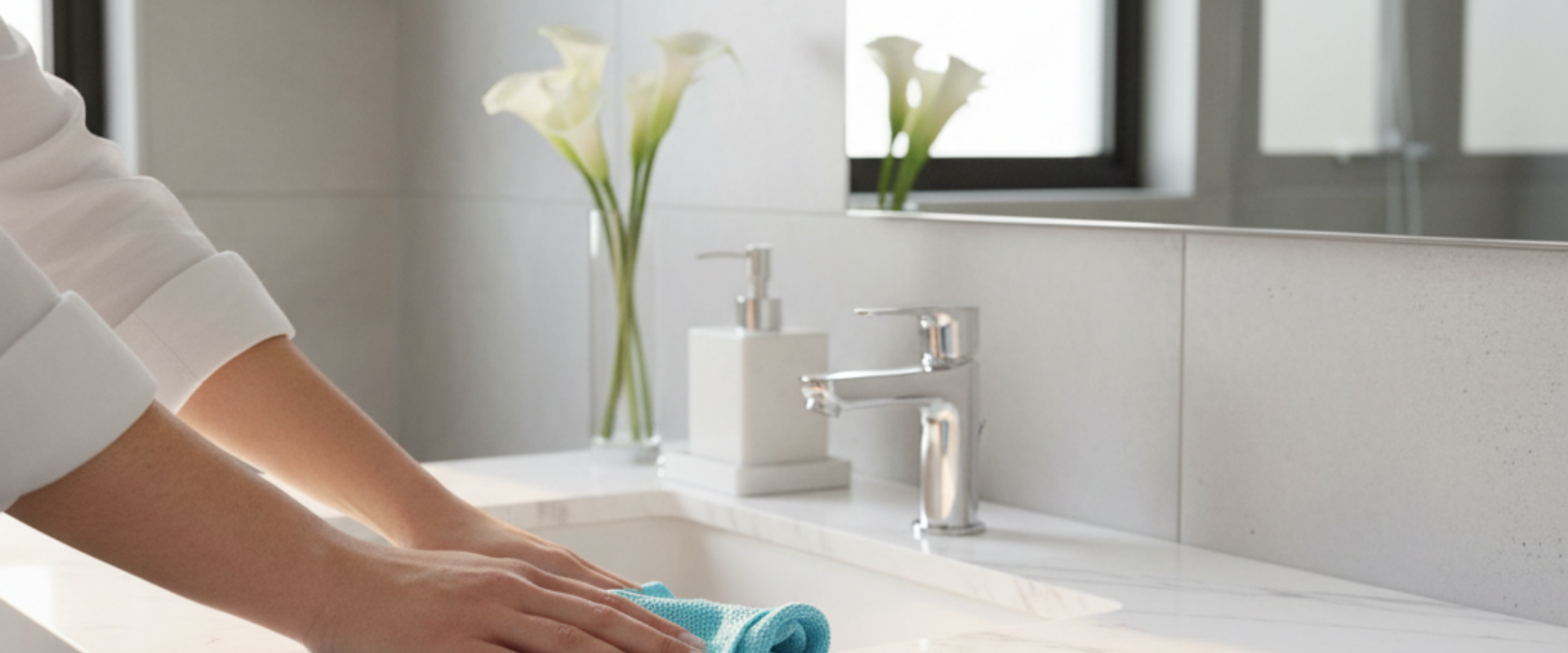
Care & Maintenance
How to clean, protect, and maintain your ARSTAR cultured marble surfaces. Simple care routines that keep vanity tops, shower walls, and shower pans looking new for 20+ years.
Mild soap + soft cloth is all you need
Non-porous gel coat — zero maintenance sealing
Minor scratches buff out with automotive wax
No bleach, acetone, or abrasive pads
How to Clean Cultured Marble
Cultured marble surfaces have a non-porous gel coat that requires no sealing and no specialty cleaners. Clean daily with mild soap and a soft cloth. Remove hard water stains with a 50/50 vinegar-water solution. The surface is repairable — minor scratches buff out with automotive wax.
Cleaning Guidelines
These rules apply to all ARSTAR cultured marble products — vanity tops, shower walls, shower pans, and lazy susans.
Do
- Use mild liquid cleaners — dish soap, baking soda + water, or diluted white vinegar
- Always clean with a soft cloth, microfiber towel, or non-abrasive sponge
- Clean spills promptly to prevent staining, especially hair dye or cosmetics
- For hard water buildup, soak a soft cloth in 50/50 white vinegar and water, apply for 15–30 minutes, then wipe clean
- Apply automotive wax (e.g., Turtle Wax) periodically to protect and restore gloss
- For light scratches on gloss finishes, buff with automotive wax or a hand-held polisher
- On matte or satin finishes, sand lightly with 350–600 grit sandpaper, then buff with a plastic sponge
- Rinse surfaces after cleaning to remove any residue
Don't
- Use abrasive pads, steel wool, sandpaper, or metal scrapers on the gel coat
- Apply bleach, ammonia, acetone, paint strippers, or drain cleaners (Drano, Liquid-Plumr)
- Use rubbing compound — it is too aggressive for the gel coat surface
- Leave aggressive chemicals sitting on the surface for extended periods
- Use scouring powders like Comet, Ajax, or Bon Ami
- Soak cleaning chemicals in the sink or shower pan — prolonged exposure damages the gel coat and voids warranty
- Use Plumber's Putty — it can damage cultured marble and voids the warranty
- Attempt deep scratch or crack repairs yourself — contact a professional
Care by Product
Each product type has specific care considerations beyond the general guidelines above.
Vanity Tops
- Wipe down daily with mild soap and warm water after use
- For hard water rings around faucets, use vinegar-soaked cloth
- Never place hot styling tools (curling irons, flat irons) directly on the surface — use a heat mat
- Avoid prolonged contact with hair dye or nail polish remover
- Store vanity tops at temperatures below 95°F (35°C) before installation
- Store upright (perpendicular to installed position) unless fully supported by a cabinet
Shower Wall Panels
- Squeegee after each shower to prevent water spots and soap film buildup
- Clean weekly with a non-abrasive bathroom cleaner or diluted dish soap
- For soap scum, apply a 50/50 vinegar-water solution, let sit 10 minutes, then wipe
- Inspect silicone caulk seams at corners and pan edges every 6 months — reseal if cracking
- Never use tile-specific cleaners (they often contain harsh acids not meant for gel coat)
Shower Pans
- Clean the anti-slip textured floor area with a soft-bristle brush to remove soap buildup
- Use mild soap and warm water — the textured surface traps less than grout lines but still needs regular cleaning
- Keep the drain clear of hair and debris to prevent standing water
- For mineral deposits in the drain area, use the vinegar-water soak method
- Never use abrasive powders on the anti-slip texture — they can wear down the factory finish
Lazy Susans
- Wipe with a damp cloth and mild soap after each use — dry with a soft cloth to prevent water spots
- Place food on plates or bowls, not directly on the surface
- Do not cut directly on the cultured marble surface — use a cutting board
- The non-porous surface does not absorb odors or liquids, but prompt cleaning keeps it looking new
Scratch Repair Guide
One of cultured marble's biggest advantages: the gel coat surface is repairable. Here's how to fix scratches yourself.
Light Scratches (Gloss Finish)
- Apply a small amount of automotive wax to the scratch
- Buff in circular motions with a soft cloth
- For deeper light scratches, use a hand-held orbital polisher with automotive polish
- Wipe clean and inspect — repeat if needed
Moderate Scratches (Gloss Finish)
- Wet-sand the area with 600-grit sandpaper using gentle, circular motions
- Progress to 800-grit, then 1000-grit for a smooth finish
- Be careful not to sand through the gel coat layer
- Buff with automotive polishing compound and a soft pad
- Apply automotive wax to restore the shine
Matte / Satin Finish Repair
- Sand lightly with 350–600 grit sandpaper to blend the scratch into the surrounding texture
- Buff with a plastic (non-metal) sponge to restore the matte finish
- Do not use metal scouring pads — they will create visible marks
Frequently Asked Questions
How do you clean cultured marble surfaces?
Clean with mild soap and warm water using a soft cloth or non-abrasive sponge. For hard water stains, soak a cloth in 50/50 white vinegar and water, apply for 15–30 minutes, then wipe clean. The non-porous gel coat surface never needs sealing or special cleaners.
Can you use bleach on cultured marble?
No. Bleach, ammonia, acetone, and other harsh chemicals can damage the gel coat finish permanently. This includes Clorox, hydrogen peroxide, drain cleaners (Drano), nail polish remover, and paint strippers. Stick to mild, non-abrasive cleaners only.
How do you remove scratches from cultured marble?
For light scratches on gloss finishes, buff with automotive wax or a hand-held polisher. For deeper scratches, wet-sand with 600→800→1000 grit sandpaper, then buff with automotive polishing compound. For matte finishes, sand lightly with 350–600 grit. Never attempt deep cracks or chip repairs yourself — contact a professional.
Does cultured marble stain?
The non-porous gel coat resists most household stains. However, prolonged contact with hair dye, nail polish remover, or strong solvents can cause damage. Always clean spills promptly. If a stain occurs, most can be removed with a non-abrasive bathroom cleaner or the vinegar method.
How do you remove hard water stains from cultured marble?
Soak a soft cloth in a 50/50 mixture of white vinegar and water. Place the cloth over the stained area and let it sit for 15–30 minutes. Wipe clean with a damp cloth. For stubborn deposits, repeat the process or let the vinegar soak longer. Avoid commercial lime/calcium removers — they are often too acidic.
Can you restore the shine on cultured marble?
Yes. Apply a coat of automotive wax (such as Turtle Wax) and buff with a soft cloth. For a deeper restoration, use a hand-held orbital polisher with automotive polish. Regular wax application (every 3–6 months) keeps the surface looking new and adds a protective layer.
How long does cultured marble last with proper care?
With proper care, cultured marble surfaces last 20–30+ years. The gel coat is repairable, meaning scratches and minor chips can be fixed without replacing the entire piece. ARSTAR products carry a 5-year limited warranty on gel coat and structural integrity.
What should you never use on cultured marble?
Never use: abrasive pads or steel wool, bleach or ammonia, acetone or nail polish remover, paint strippers, drain cleaners (Drano, Liquid-Plumr), scouring powders (Comet, Ajax), rubbing compound, Plumber's Putty, or commercial lime removers. These products damage the gel coat and void the warranty.
Last updated: April 2026
Questions About Your ARSTAR Product?
Check warranty coverage, browse installation guides, or contact our support team directly.