Two Popular Choices, Very Different Strengths
When specifying vanity tops for residential or commercial projects, two materials dominate the conversation: cultured marble and engineered quartz. Both are man-made, both come in a wide range of colors, and both deliver excellent durability. But the similarities end there. Understanding where each material excels — and where it falls short — helps you make the right choice for your budget, timeline, and design goals.
Composition
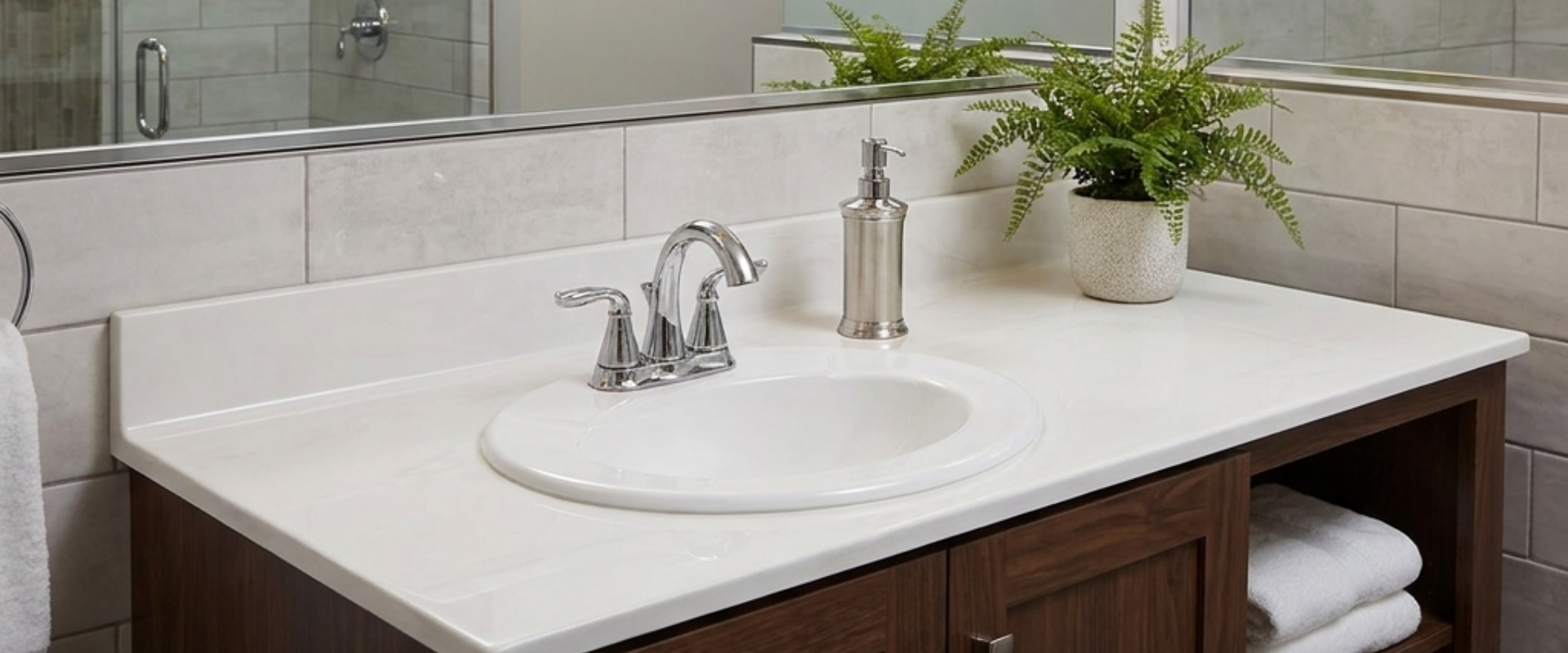
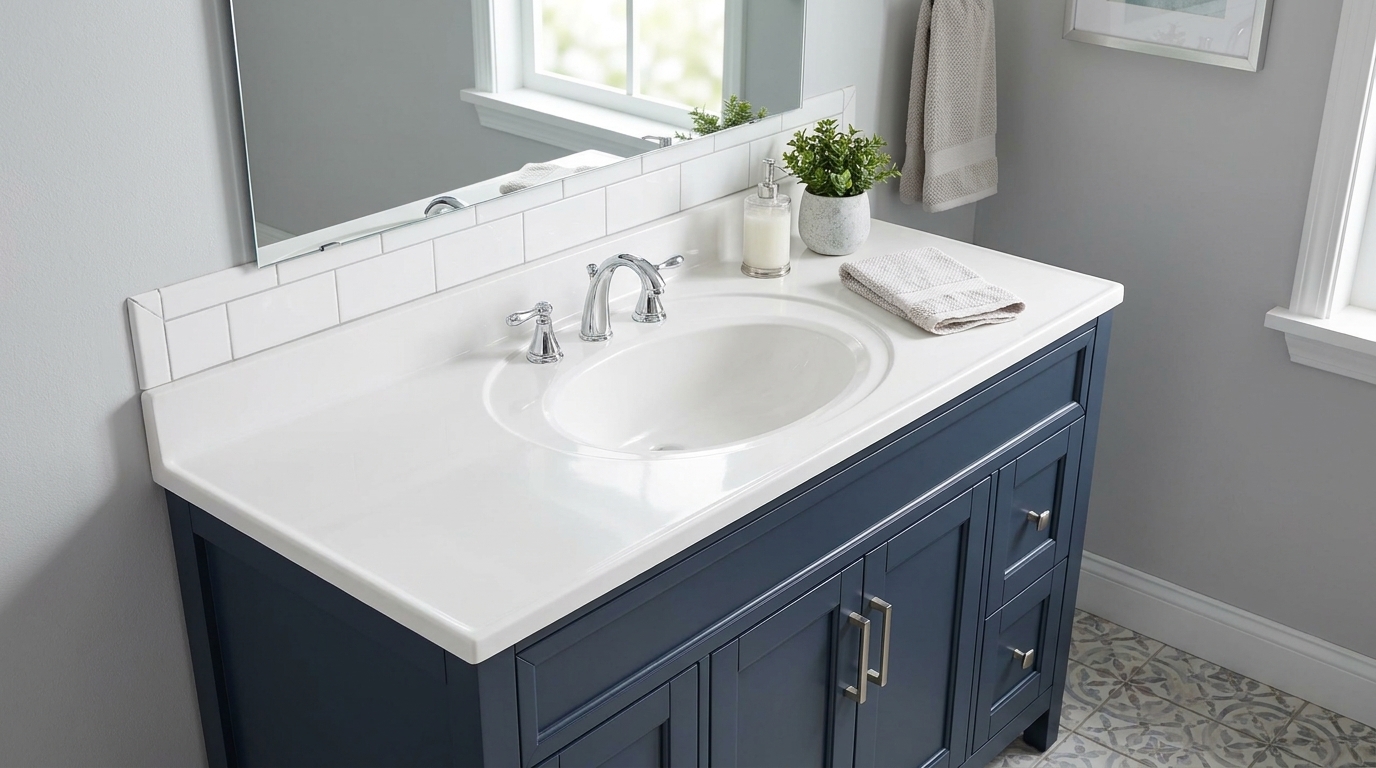
Cultured marble is made from crushed natural marble (calcium carbonate) mixed with polyester resin, finished with a colored gel coat. The gel coat is the visible surface and provides a non-porous, sealed barrier.
Engineered quartz is made from roughly 90–94 % ground natural quartz crystals bound with polymer resins and pigments. It does not have a gel coat — the color runs through the full thickness of the slab.
Side-by-Side Comparison
Cost
Cultured marble is significantly less expensive. A cultured marble vanity top with an integral bowl typically costs 30–50 % less than a comparable quartz top plus a separate undermount sink, fabrication, and edge profiling. For multi-unit projects — hotels, apartments, student housing — the savings are substantial.
Integral Bowls vs. Separate Sinks
This is cultured marble's signature advantage. ARSTAR vanity tops are cast with the bowl built in — no seam between bowl and countertop, no separate sink to purchase and install, and no gap where water and bacteria can collect. Quartz requires a separate undermount or vessel sink, adding cost, complexity, and potential leak points.
ARSTAR offers bowl shapes across all three collections: oval (Classic), rectangular and wave (Contemporary), and square (Minimalistic). Explore every option on our vanity tops page.
Weight
Cultured marble is lighter than quartz. A standard 49" cultured marble vanity top weighs roughly 35–45 lbs, while a comparable quartz slab weighs 60–80 lbs. Lighter weight means easier handling, lower shipping costs, and less structural demand on cabinetry.
Installation
Cultured marble tops arrive ready to install — faucet holes pre-drilled, bowl integrated, backsplash included. Set it on the cabinet, connect the plumbing, and you are done. Quartz requires on-site or shop fabrication (cutting, edge profiling, sink cutout, polishing), plus separate sink installation. Cultured marble saves hours of labor per unit.
Maintenance
Both materials are non-porous and do not require sealing. Day-to-day cleaning is the same: mild soap and a soft cloth. The main difference is repairability — minor scratches on cultured marble's gel coat can often be buffed out with automotive polishing compound, while scratches on quartz are more difficult to address.
Heat Resistance
This is where quartz has an edge. Quartz is more heat-resistant than cultured marble. Hot styling tools (curling irons, flat irons) placed directly on cultured marble can damage the gel coat. We recommend always using a heat mat or towel. Quartz tolerates brief contact with hot objects better, though extreme heat can still damage the resin binders.
Customization and Color Range
ARSTAR offers 44+ cultured marble colors including Carrara, Calacatta, solids, and granite looks, in both gloss and matte finishes. Quartz brands offer their own extensive color libraries. Both materials offer wide design flexibility, though cultured marble's veining is applied at the surface (gel coat) while quartz veining runs through the slab.
Certifications
ARSTAR cultured marble carries CSA B45.5 / ANSI Z124.3 certification for plumbing fixtures. Quartz slabs are typically not certified as plumbing fixtures because they do not include integral bowls. If your project spec requires CSA/ANSI-certified vanity fixtures, cultured marble with integral bowls meets that requirement out of the box.
When Cultured Marble Wins
- Budget-conscious projects (multi-unit housing, hotels, renovations)
- Projects requiring integral/seamless bowls
- Fast installation timelines (no fabrication needed)
- Projects requiring CSA B45.5 / ANSI Z124.3 plumbing fixture certification
- Custom sizes and configurations
When Quartz Wins
- Kitchens or areas where heat resistance is critical
- When through-body color/veining is preferred
- High-end residential projects where slab aesthetics are paramount
The Bottom Line
For bathroom vanity tops — especially at scale — cultured marble offers a compelling combination of lower cost, easier installation, seamless bowl integration, and certified quality. Quartz is an excellent material, but it was designed for kitchen countertops, where heat resistance and through-body aesthetics matter most. In the bathroom, cultured marble is purpose-built to perform.
Ready to compare options for your project? Contact ARSTAR for pricing, samples, and expert guidance on choosing the right material for your needs.